
Why Do We Choose the Wrong Tree?
2/4/2026
By: Camilo Flores
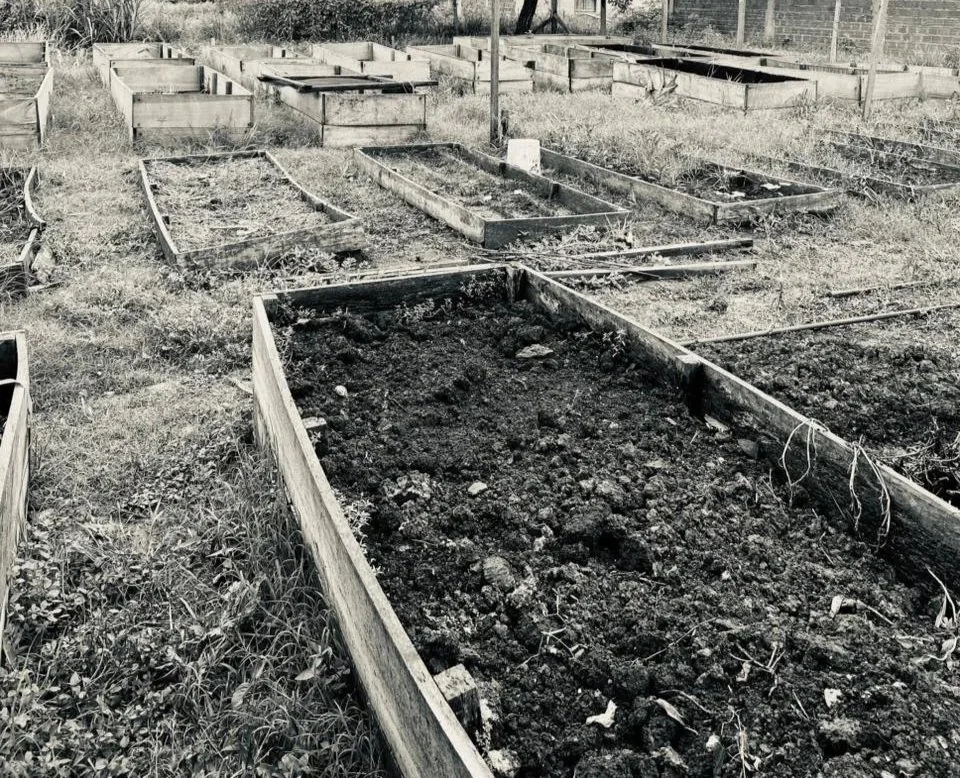
The other day I was in the garden, simply contemplating the space between the planter beds, and I thought about how beautiful a tree would look right there in the middle, giving life and shade to the whole place. That image sparked a question that wouldn't let me sleep: why did God, the original Gardener, place such specific trees in the center of Eden? I started researching, and what I found left me stunned.
It turns out the Tree of Life wasn't a magic amulet; it was a symbol of God’s very presence. Being near that tree meant having access to eternal life because you were connected to the Source. But right next to it was the Tree of the Knowledge of Good and Evil. In the original Hebrew, "to know" (Yadá) isn't about knowing facts; it is about experience. The drama began when Adam decided he didn’t want to wait for God’s wisdom. Instead, he wanted to experience autonomy: defining what is good and what is evil by his own means. After sinning, we were separated from the Tree of Life. This was not a cruel punishment, but a necessity because living forever in a state of rebellion and self-autonomy would be an eternal hell.
What blew my mind was discovering that, since that exile, humanity has desperately tried to recreate that tree. In ancient history and archaeology, such as studies on Mesopotamia or the book The Tree of Life by Britannica, we see how almost all ancient cultures had "sacred trees." They were trying to manufacture their own access to the divine, seeking blessing on their own terms, but always failing.
However, God had an amazing rescue plan through Jesus. Furthermore, He didn't just sit idly by during those times. He designed the Tabernacle, which was essentially a "portable Eden." If you look at the details in Exodus 25, the lampstand (Menorah) wasn't just an ordinary lamp; it was a golden tree with almond blossoms and fruit. It was surrounded by curtains embroidered with cherubim, just like the entrance to Eden. God was saying, "I want to live with you again."
Even so, we kept breaking the rules, choosing the path of our own wisdom. But God sent Jesus, whom the prophet Isaiah (11:1) describes as the "Branch," that little sprig full of life sprouting from a stump that looks dead and dry. And here is where I was left speechless: the radical difference between Adam and Jesus occurs in two gardens.
In Eden, Adam was in a perfect place and decided, "My will, not Yours," sinking into his own autonomy. Centuries later, Jesus was in another garden (Gethsemane), surrounded by anguish, and He said the exact opposite: "Not my will, but Yours be done" (Luke 22:42). Jesus reversed Adam’s bad decision and our own in a garden of pain.
Finally, Jesus carried all the sin of our self-sufficiency to another "tree." In the New Testament, the word xylon (wood or tree) is used to refer to the cross. He died on a dry tree so that we could return to the living tree. He cleansed us of that obsessive desire to control ourselves and restored our right to return to the original garden.
In fact, there’s a detail I found fascinating: when Jesus is resurrected, Mary Magdalene sees Him but doesn't recognize Him immediately. She mistakes Him for the gardener (John 20:15). I don’t think that’s a coincidence. Jesus is the "New Gardener" who has come to restore what was spoiled in the first garden.
Sincerely, studying this has left me overwhelmed. I realize that I often live as if I were the owner of truth, deciding by my own means what suits me best without consulting the Owner of the Garden. This study has changed the way I make decisions. I no longer want to be guided by my limited wisdom, but rather depend on that "Gardener" who was able to transform a tree of death into a Tree of Life. Now, every time I see the empty space in my planter beds, I don’t just see a spot for a tree; I see a reminder that my life only flourishes when I let God be the one who defines what is good for me.

Camilo, a Business Engineering graduate originally from Tarija, BO, is leading the restructuring and growth of the community garden. He is passionate about serving and supporting the needs of the local community and church. Married and a proud father, he enjoys life with his beautiful wife and daughter.